
Welcome to IBM Cloudability Launch Kit
What is IBM Cloudability?
IBM Cloudability streamlines and automates cloud financial management, enhancing cost accuracy and decision-making confidence through a collaborative workspace for cloud spend budgeting, forecasting, and optimization. Cloudability replaces manual, spreadsheet-driven processes with a modern, data-driven solution that reduces time spent on cost aggregation and allocation, enabling teams to focus on analyzing usage patterns and rightsizing resources. With automated ingestion from major cloud providers, unified tagging and allocation, and streamlined variance analysis across accounts and services, organizations gain clear visibility into their current cloud financial posture. This continuous insight empowers teams to reallocate budgets, refine forecasts, and optimize commitments and reservations—shifting resources to high-priority workloads and making quick, informed decisions in response to evolving demand and market conditions.
Who is the intended audience?
Whether you're a FinOps lead, cloud program manager, or transformation champion, this kit is your blueprint for building momentum and delivering results.
Introduction to IBM Cloudability launch kit
Welcome to the Cloudability launch kit! Transforming cloud financial management requires more than just deploying a tool; it demands strategic alignment, stakeholder engagement, and a clear path to adoption.
That's why we've created the IBM Cloudability Launch Kit, a comprehensive collection of resources designed to help you accelerate implementation, drive organization-wide adoption, and deliver measurable results. Each resource in this kit is editable and designed to be tailored to your organization’s needs.
Our goal is to support you throughout your journey, from initial planning to long-term optimization. Below, you'll discover a curated collection of resources, including:
With these resources, you can ensure that your organization is set up for success, achieving the full potential of IBM Cloudability while maximizing value across all stakeholders.
Start your journey toward smarter, more strategic cloud cost management.
Phase 0: Introduction to FinOps and Cloudability
This section provides an overview of FinOps, the practice of aligning cloud usage with financial accountability to optimize costs and maximize business value. This section also introduces Cloudability to your end users who might be unfamiliar with the solution. Explore the resources below to learn the basics, understand Cloudability’s capabilities.
|
|
|
|
|
|
|
|
|
|
Introduction to Cloud and Cloudability
|
|
Ensure successful adoption of Cloudability by communicating its value, usage, and support resources to stakeholders across the organization by following these phases.
Phase 1: 6-8 weeks before the launch of Cloudability
1.1 Learn about Organizational Change Management (OCM) Framework
Apptio has created an OCM framework to help our customers with the adoption of their new/updated process when Apptio is implemented. This framework is robust and has a lot of great content for you to pick and choose from.
WHY? OCM is vital to any implementation of a new or updated process as stakeholders want to know what exactly is changing. Having a clear communication, rollout and training plan can really help everyone understand exactly what will happen and when.
WHAT? Multiple templates, videos, training collateral to pick and choose from.
HOW? Review training on OCM and be inspired to lay a solid foundation for your organization to understand and embrace Apptio.
1.2 Identify your Stakeholders
Stakeholder management is vital when thinking about Organizational Change Management. Identifying everyone who will be involved in the entire process is key.
WHY? To ensure everyone receives the correct communication, rollout and training plans.
WHAT? Multiple communication strategies (inform, consult, involve, collaborate, empower, Train) and roles and responsibilities.
HOW? Access and download the resources listed below. Each resource walks you through an activity for you to complete and gives you more information about the Who, What, and Why.
|
|
|
|
|
|
Building Adoption: Organization Change Management Best Practices
|
|
|
|
Change Management Overview
|
|
|
|
Identify Your Users Template
|
|
|
|
Stakeholder Assessment Template
|
|
|
|
Cloudability User, Administrator permissions
|
|
|
|
|
|
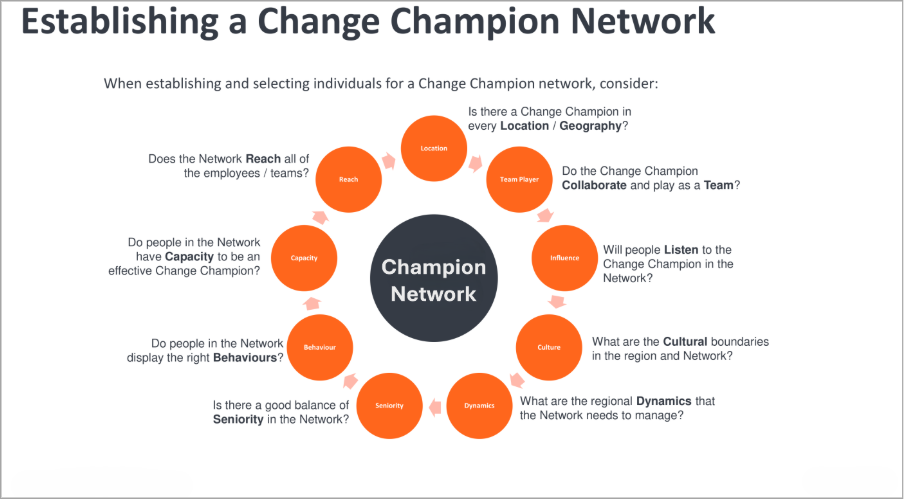
1.3 Establish a change champions & network
Establish change champions:
Change Champions can help advocate for the new process and foster a positive, informed transition across the team.
WHY? To ensure the change is adopted and communicated in a positive light by peers and not just leadership.
WHAT? A network of individuals across departments who have influence and are excited about the change.
HOW? A champion network framework with considerations and questions to ask when identifying the individuals
Establish a Change Champion Networ
It is imperative to have communications cascaded down from the executive sponsor first then to the Change Champions. To Ensure the Change Champions communicating are the ones that have a relationship with the employees that need to change. Employees are more receptive to people they know, than just leadership in general. Important characteristics of a Change Champion: Someone who people look up to, someone who is the same level as majority of the users you are trying to influence, someone who is seen to be influential.
1.4 Create a communication plan
Constant communication is key to any change successes. Ensuring people understand what is in it for them is vital for the change to be adopted.
WHY? To ensure constant, consistent communication to give end users and other stakeholders time to accept the change and ask questions.
WHAT? Multiple communication methods (emails, town halls, slack channels, anonymous question, newsletters etc).
HOW? An excel communication plan template, email templates and sample newsletters.
Create a Buzz and get your users excited about IBM Cloudability. Access and download the resource templates below:
|
|
|
|
|
|
Sample Communication Plan
|
|
|
|
Launch Announcement Email Template
|
|
|
|
Cloudability Persona messaging guide
|
|
|
|
Stakeholder feedback quick-start checklist
|
|
Phase 2: 1-6 weeks before the launch of Cloudability
Providing the right level of training to end users will ensure the change is adopted.
WHY? End users will feel equipped to execute the new processes and ask all the questions they have before it is finalized to ensure they feel comfortable.
WHAT? Multiple training mechanisms (videos, documents, classroom training, office hours, etc.)
HOW? The End User training resources will help you frame out & prepare for introducing IBM Cloudability to your end users.
|
|
|
|
|
|
End User training checklist
|
|
|
|
IBM Cloudability overview
|
|
|
|
Sample dashboard template
|
|
|
|
Best practices for Tagging in Cloudability
|
|
|
|
Cloudability value features
|
|
|
|
Cloudability in-app training recommendation
|
|
|
|
|
|
2.2 Develop Feedback Mechanisms
Getting feedback directly from end users is vital for continuous improvement.
WHY? End Users and other stakeholders will feel like their voices are being heard. It is imperative the improvements are communicated out so they can see the changes taking shape.
WHAT? Multiple Feedback Mechanisms (Email alias, form, meetings etc).
HOW? Use this example form as an idea of how end users can provide feedback. If you prefer, you can use already existing structures in your organization or come up with another idea.
2.3 Determine your Operational Readiness
Understand and determine if your team feels ready from an operational standpoint.
WHY? To ensure success of the solution and confirm that end users have a team they can rely on to answer all questions and guide them.
WHAT? Operational Readiness Checklist.
HOW? Use the checklist below assess your operational readiness.
|
|
|
|
|
|
Operational Readiness checklist
|
|
Phase 3: Yearly activities
3.1 Reinforce the change with a rewards and recognition structure
Where there is change, there is risk and where there is risk, there should be reward.
WHY? Providing an incentive to encourage Cloudability usage not only drives adoption but also accelerates the organization’s ability to realize value from its cloud cost management investment.
WHAT? Rewards and recognition structure that is structured for the number of users (A simple thanks you, kudos in team meetings, use HR structure, buy donuts for the team etc.)
HOW? Ensuring employees get recognized for accepting a change and using the new process is a vital step in any change management strategy.
3.2 Establish Success Metrics
A structure should be put in place to measure the impact of the changes.
WHY? By establishing metrics and reporting on adoption, utilization and proficiency, it provides an excellent way to keep stakeholders informed of the ongoing health and success of the change.
WHAT? Multiple adoption measures (Number of users, amount of feedback, speed of process etc).
HOW? Define clear success measures upfront and monitor them regularly, as agreed by the steering committee. Reporting these metrics on a set cadence ensures transparency, highlights progress and identifies areas needing attention for full implementation.
|
|
|
|
|
|
FinOps Practitioner certification
|
|
|
|
AAEP Cloudability certification
|
|
|
|
Customer evidence and success story template
|
|
|
|
IBM Apptio Costing Essentials launch Kit
|
|
|
|
IBM Apptio Planning launch kit
|
|
|
|
|
|
|
|
|
|
(Please note that Value Framework is only accessible to IBM-Apptio clients. If you are client and seeking for Value Framework access kindly submit this form Value Framework Request Form Link)
Download the IBM Cloudability Launch Kit today and take the first step toward transforming your cloud financial management. With the right resources and a structured approach, you'll be well-positioned to drive adoption, demonstrate value, and achieve lasting impact.
We’re here for you! Contact apptio-education@ibm.com with any questions.