
InstructLab is a tool designed for fine-tuning language models, with an important distinction in synthetic data generation. In this process, a teacher model is used to create specialized data in a specific domain of knowledge, which is later used to train a target model.
The tool offers different training pipelines, such as simple, full, accelerated, and lab-multiphase, which vary in complexity, performance and use of resources such as GPU. For more details, see the documentation available at: pipelines-ilab.
The goal of this material is to provide an accessible repository for using InstructLab on ppc64le architectures, using Power9 systems with GPU support. The proposal is to enable the use of the tool both on CPU, with the full pipeline, and on GPU, with the accelerated pipeline.
For this, it was necessary to containerize the solution, enabling the installation of dependencies that do not have native support for this architecture. Among the main adapted packages are PyTorch, torchvision, docling, pypdfium2, and libraries based on tree-sitter.
As validation, fine-tuning tests were carried out with the Granite 3.3 8B Instruct model in full mode and with a Llama 3B Instruct model in accelerated mode, demonstrating the feasibility of the approach.
What This Work Enables
With the steps and adaptations described, you will be able to:
-
Perform fine-tuning of models using InstructLab in Power9 environments;
-
Understand the dependency stack required for this type of execution;
-
Reproduce the complete environment through containers;
-
Adapt language models to specific domains;
-
Explore scenarios using CPU and with GPU acceleration.
Environment
The setup was validated in the following environment:
Understanding the Dependency Stack
As mentioned earlier, running InstructLab in this environment depends on a set of libraries that operate across different layers of the system. These dependencies range from model execution to data processing and content analysis, and are essential for the tool’s full functionality. However, some of them required adjustments and, in certain cases, manual compilation using tools such as CMake and Ninja to generate wheels.
In this context, PyTorch acts as the main execution layer, being responsible for tensor operations and GPU support, in addition to serving as the foundation for model training and inference. Building on it, torchvision complements this ecosystem with utilities and extensions that also need to be compatible with the architecture.
Beyond the execution layer, there are dependencies focused on data processing. docling and pypdfium2 are used for document manipulation, enabling the extraction of information throughout the synthetic data generation workflow.
Finally, libraries based on tree-sitter are employed for structural analysis of text and code, playing an important role in steps that involve parsing and content organization.
Figure 1 presents an overview of the main dependencies that required modifications.
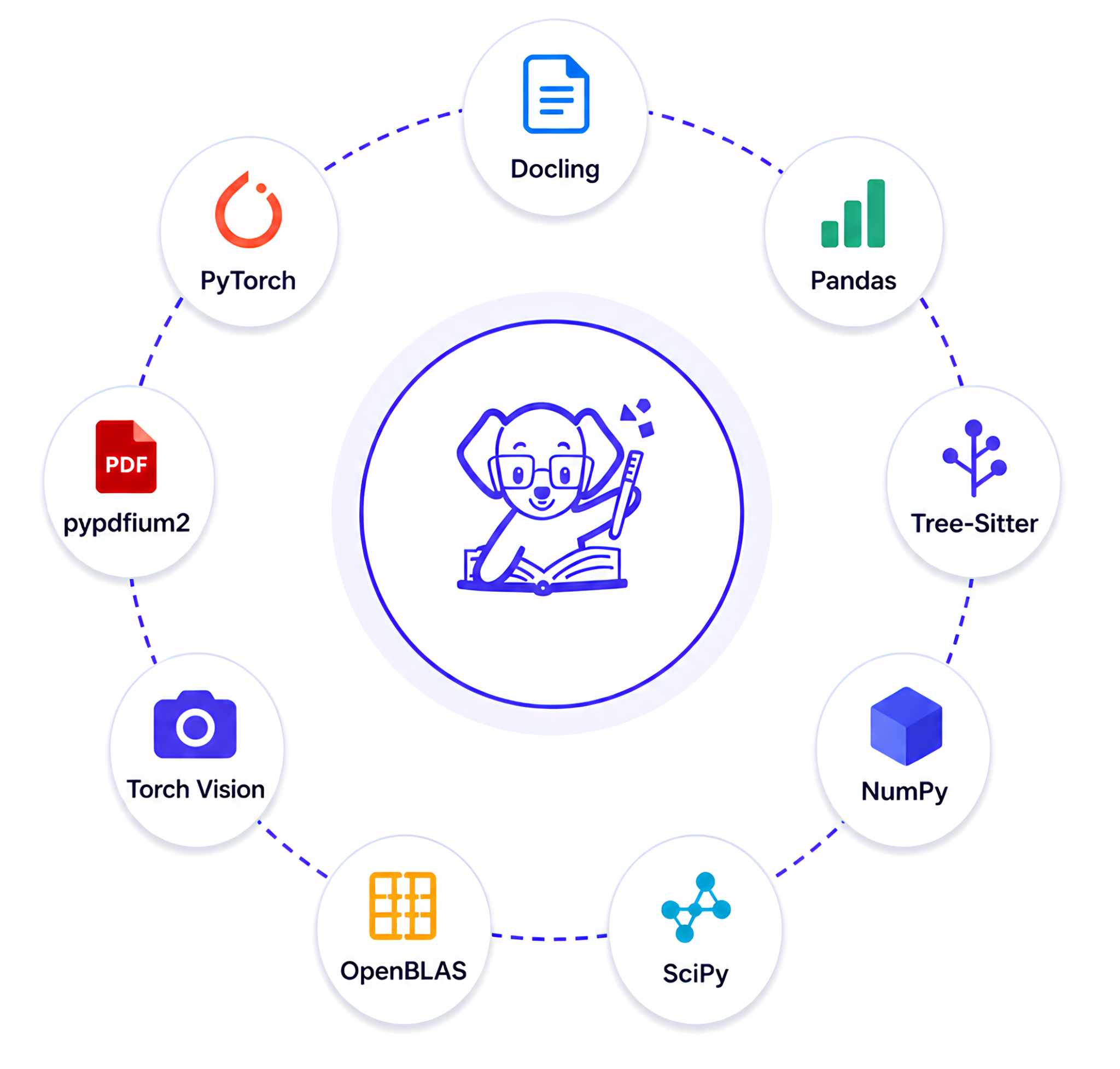
Figure 1: Main dependencies for installing InstructLab.
The main challenge is the lack of support for the ppc64le architecture. As a result, adaptations were required, such as:
-
Fixing incompatibilities in specific libraries;
-
Adjustments to unsupported sub-dependencies;
-
Manual build of some packages;
-
Environment management using Conda.
With these adaptations, it was possible to ensure the proper functioning of InstructLab on Power9 in both CPU and GPU scenarios.
Containerizing the Solution
A repository was developed with a containerized solution that brings together the dependencies and configurations required to run InstructLab.
Repository: https://github.com/llm-pt-ibm/instructlab_gpu.
The repository includes scripts for building and running the environment, automating essential steps of the process.
Among the main features, the following stand out:
-
Installation of InstructLab 0.25 through the command bash build.sh;
-
Execution of the environment using the command bash run.sh after building the images;
-
Availability of ilab inside the container, allowing the use of commands such as ilab config init, ilab config edit, ilab data generate, and ilab train;
-
Persistence of generated data and fine-tuned models, ensuring that modifications are maintained across executions.
Figure 2 shows the initial interface displayed after running the run script.
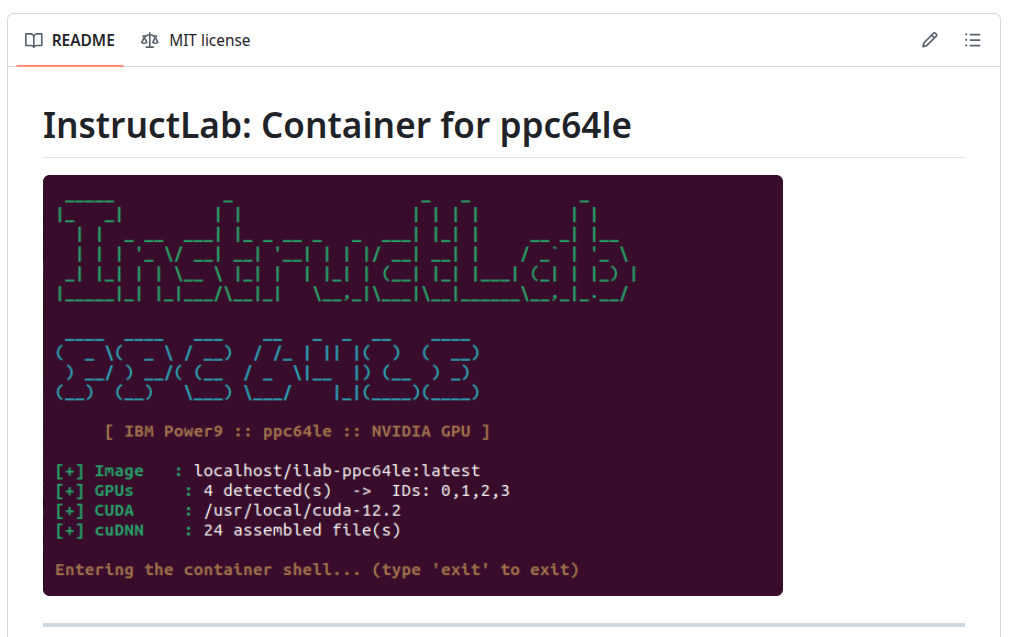
Figure 2: Initialization of ilab on ppc64le.
Conclusion
This work demonstrates that it is possible to use InstructLab on IBM Power9 systems with ppc64le architecture and GPU support, provided that the necessary adaptations are made to the dependency stack.
By addressing these compatibility issues and providing a reproducible environment, it becomes feasible to perform model fine-tuning efficiently in this context, expanding the use of modern LLM-based tools on IBM Power systems.
Disclaimer
This work is not an official IBM release or software distribution and is not developed or supported by IBM.
This work was developed by the Federal University of Campina Grande (UFCG), a Brazilian public university, as part of a Research, Development, and Innovation project conducted in partnership with IBM and Flex Brazil.
Next Steps
In our next blog post, we will present a solution for SDG Hub and Training Hub, tools developed as an evolution of InstructLab, a project that was recently archived. The solution will cover the use of these tools for synthetic data generation and model training.
#PowerDataandAI