At the core of the IBM NS1 Connect Managed DNS offering is a robust, high-performance Anycast DNS network, supported by globally distributed Points of Presence (PoPs).
NS1 Connect operates 30 Points of Presence across 30 cities in 14 countries and 6 continents. There are 26 PoPs for NS1 Connect Managed DNS and 4 additional PoPs located within China for our DNS in China offering. This globally distributed infrastructure helps organizations deliver fast, reliable DNS resolution to users around the world, while supporting availability, resilience and consistent application experiences.
What is a Point of Presence (PoP)?
A Point of Presence, or PoP, is a physical location where network infrastructure is deployed to provide connectivity and deliver services. In authoritative DNS, PoPs hosts the infrastructure that responds to queries for the domains it serves.
The physical location of the DNS infrastructure handling a DNS query can influence how quickly the response reaches the user. Rather than relying on a single central location, a globally distributed DNS network places infrastructure in multiple regions, bringing DNS resolution closer to users and the networks they rely on.
The geographic distribution of DNS infrastructure can make a meaningful difference to the performance and reliability of online services.
Speed – a query answered by a nearby PoP completes faster than one that has to cross an ocean, which means users reach your application sooner.
Resilience – if one location has a problem, such as a network issue, maintenance or a regional outage, queries are answered by other PoPs and your domains keep resolving.
Capacity and load distribution – spreading query traffic across many locations keeps any one site form carrying the full load. It also helps absorb sudden surges in traffic, including malicious ones.
Consistent experience around the world – whether your users are in New York, Tokyo or Johannesburg, a broad PoP footprint helps give them a similar experience. Network routing, connectivity and local internet conditions can also influence the experience.
How does Anycast DNS work?
IBM NS1 Connect Managed DNS uses Anycast routing to distribute DNS queries across its global network. With Anycast, the same IP address is announced from multiple locations. Internet routing determines which location receives a query, based on routing information, network topology and other conditions. This often directs queries to a nearby or well-connected PoP, although the selected location is not necessarily the one geographically closest to the user.
There is no need to configure a separate DNS destination for every region. The Anycast network handles routing to an appropriate location, while NS1 Connect's distributed infrastructure responds to DNS queries.
DNS for China: a dedicated network for mainland China
Delivering reliable DNS services in mainland China presents unique networking and regulatory challenges. NS1 Connect operates a dedicated DNS for China network, with four additional PoP locations that are separate from the global Anycast infrastructure, helping organizations improve DNS performance and reach users within mainland China.
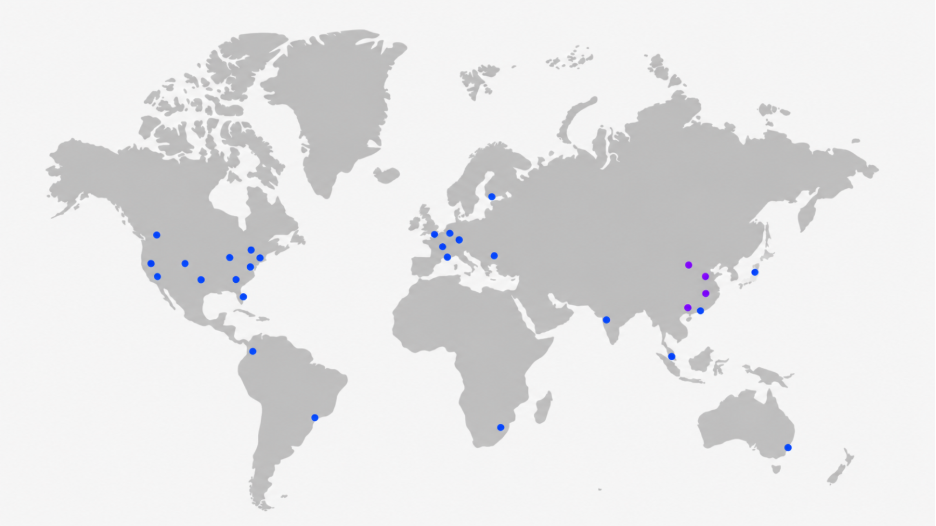
NS1 Connect PoP Locations
China — 4 additional PoPs
Built for where your users are
With 26 global Managed DNS PoPs spanning six continents and 4 additional PoPs dedicated to mainland China, IBM NS1 Connect provides a distributed DNS foundation for organizations serving customers across international markets.
Combined with intelligent DNS traffic steering, health checks and centralized management through the NS1 Connect portal and API, this infrastructure helps organizations manage DNS and direct users to appropriate application endpoints based on availability, geography and performance.
Learn how IBM NS1 Connect can help improve DNS performance, strengthen resilience and give you greater control over application traffic.
#Technical
#TechnicalBlog
#community-stories2